Project overview
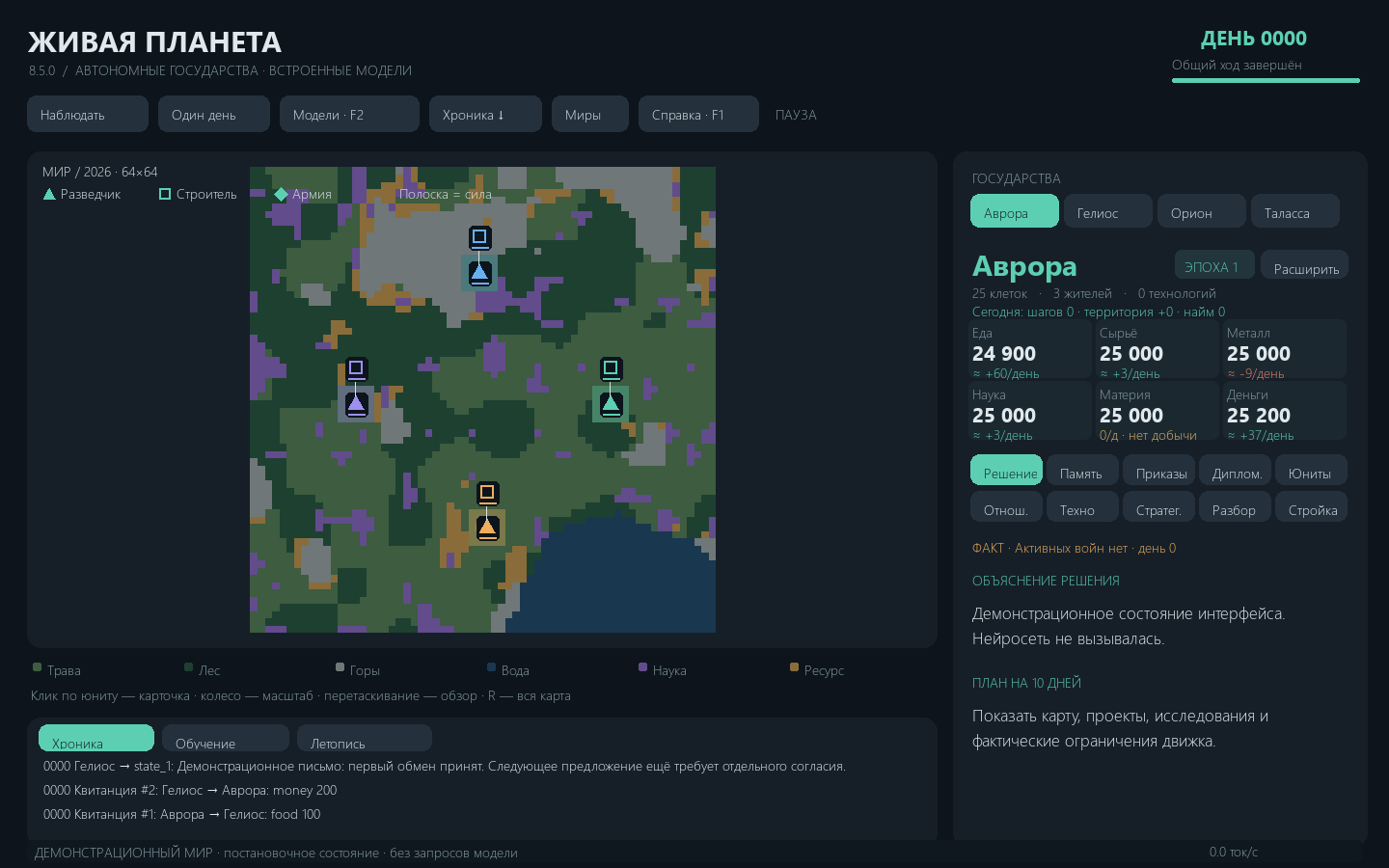
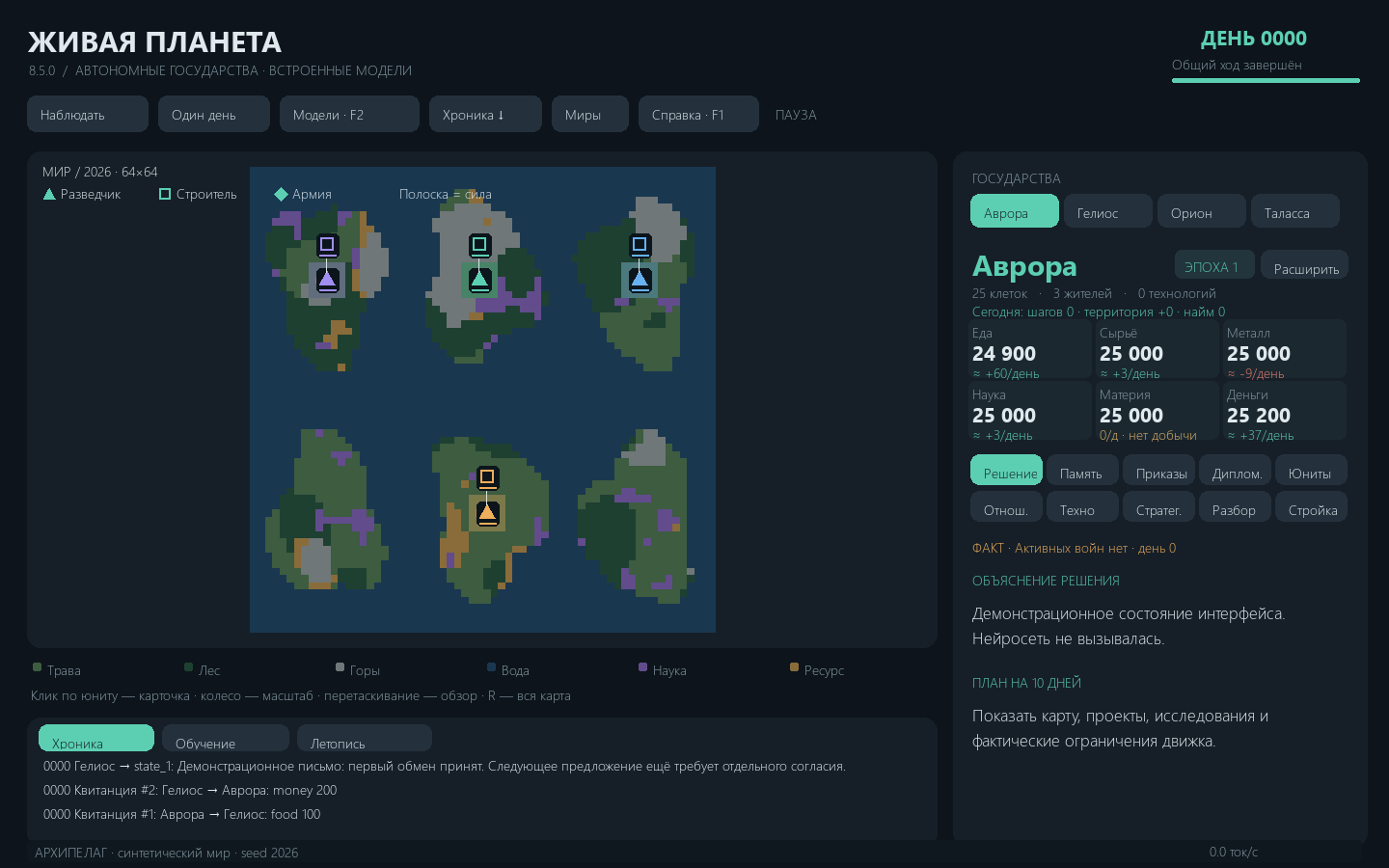
A world shaped by the decisions of nations: economics, technology, diplomacy, and conflict. Designed for local use while preserving the original simulation rules.
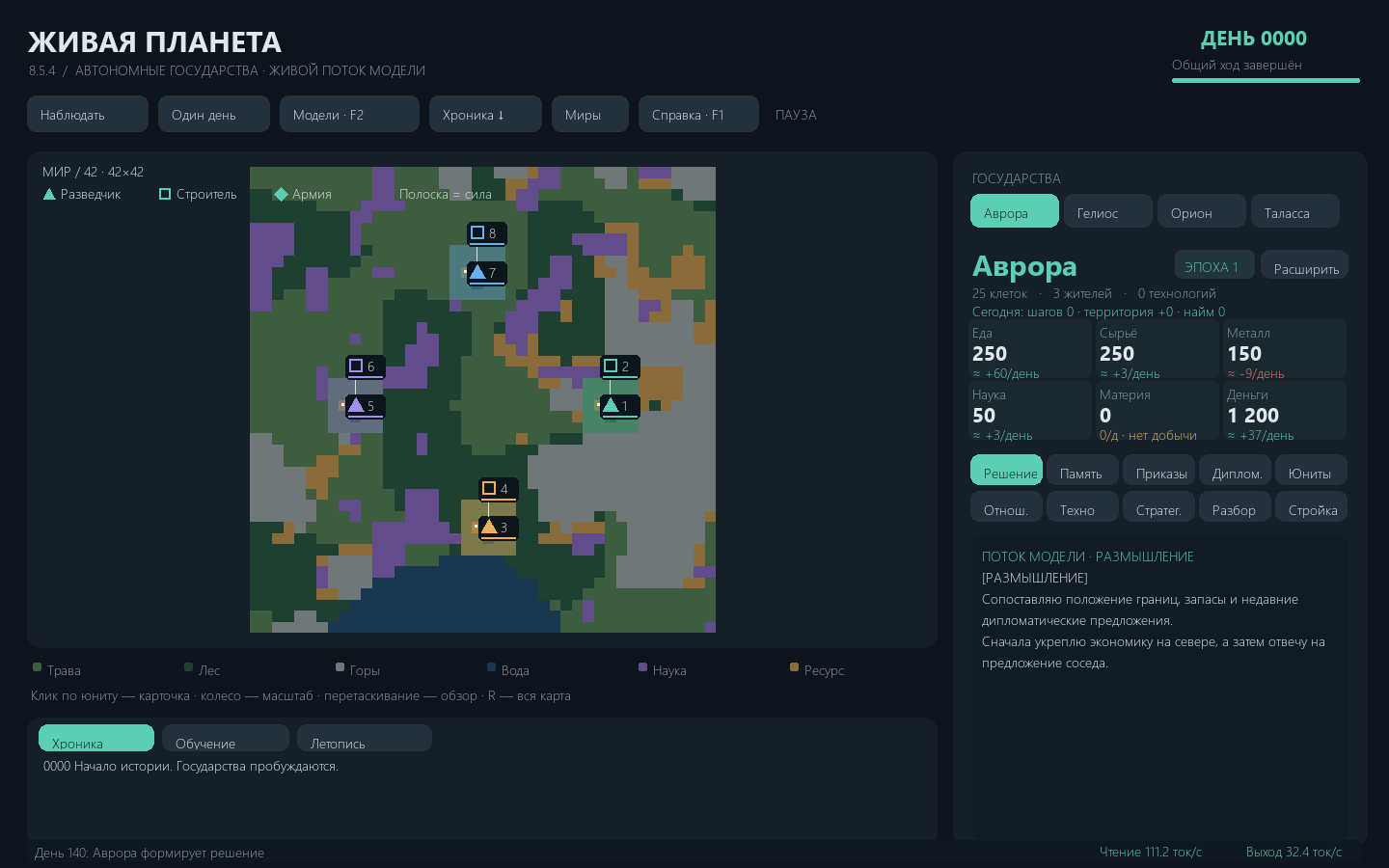
An experimental civilization simulator where nations are run by local AI models. The stable source version for this edition is 8.5.4.
A world shaped by the decisions of nations: economics, technology, diplomacy, and conflict. Designed for local use while preserving the original simulation rules.
Setup guides, project architecture, and references to game systems.
Original commits and releases, retaining their authorship and dates.
A language model proposes structured decisions. The game engine checks ownership, resources, technologies, routes, and treaties before applying them. A suggestion does not become part of the world unless the simulation rules allow it.
Each country has its own territory, resources, plans, diplomatic relations, and memory.
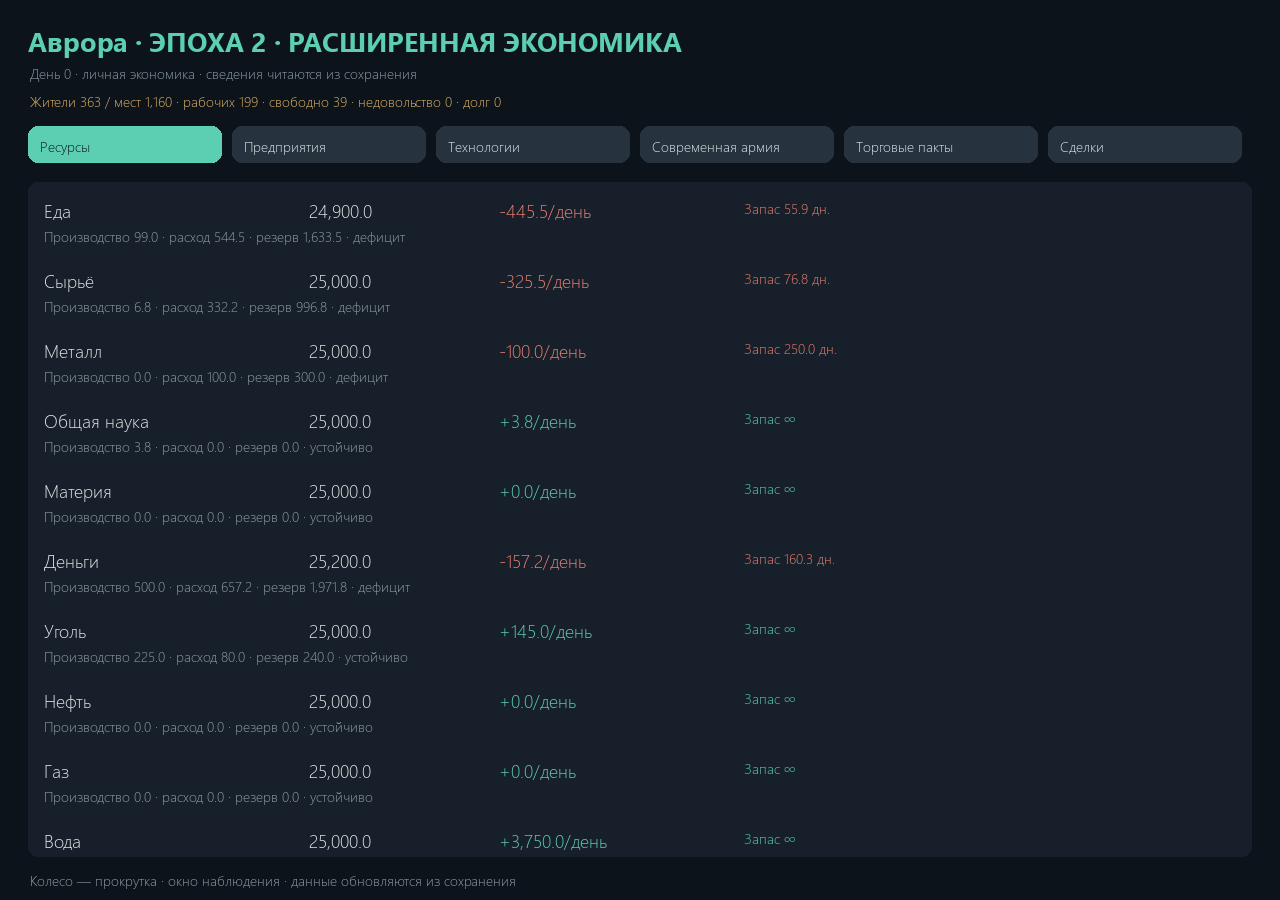
Production depends on labour, inputs, energy, building upkeep, supply, and crises.
Nations negotiate, trade, form alliances, and fight under the simulation's rules.
The 8.5.4 Windows release includes the llama.cpp runtime. Model weights are provided separately.
Get started without searching the repository. Pick a download and follow these steps.
Download SETUPGAME.exe to install, or choose the ZIP to run from a folder without a standard installation.
Add your own compatible GGUF model to the models folder. Model weights are not included in the public package.
Open the game, select a model under Models · F2, create a world with 2–6 nations, and run one day.
After reviewing the decisions, start continuous observation to watch the world develop.
Model output appears in the game as it is generated. Context-reading speed and response-generation speed are shown separately. See the 8.5.4 release card for the full release notes.
The game, its custom icon, and the bundled Windows llama.cpp runtime.
GGUF model weights and personal saves are not included. Choose a model that fits your computer's memory and graphics hardware.
Packaged releases target Windows. The bundled runtime runs supported GGUF models without LM Studio or a cloud API. Model size and speed depend on your hardware; this site does not claim an unverified minimum RAM or VRAM requirement.
The Python source requires Python 3.12 and the dependencies in requirements.txt. Installer and portable builds are listed in the releases catalogue.
Model weights, personal saves, settings, and local logs are not included in public archives. With a local model runtime, requests are processed on your computer. A remote compatible server may receive game data if you configure one.
The portal is available in ten languages. Use the selector at the top of each page. Some technical chapters in the built-in help are available only in Russian; the help page labels this clearly.
No. The installer includes the llama.cpp runtime. You provide the GGUF model weights.
There is no installer or portable ZIP published for that version in the public release catalogue. The tagged source snapshot preserves its code but is not a packaged build.
The installer guides you through a Windows installation. The ZIP can be extracted and launched from a folder without a standard installation.
No. GGUF weights are large and depend on your choice, so download them separately.
Open a version card in Versions & downloads and expand its full release notes.
Living Planet was created by TPECKA180 (ТРЕСКА180). Preserve the original creator attribution and follow the project license when redistributing.
The website is translated into ten languages. Some in-game interface strings and technical help chapters may remain untranslated; the portal labels those limitations clearly.